How to Remove Dye From a Leather Bag Safely (Without Damaging the Leather)
How to Remove Dye From a Leather Bag Safely (Without Damaging the Leather)
Removing dye from a leather bag requires care, patience, and the right approach to avoid cracking, fading, or drying out the leather. Dye transfer often happens when dark clothing rubs against light-colored leather, especially in humid or warm conditions. The key to safe dye removal is acting early, using gentle cleaning methods, and always testing products on a hidden area first. Harsh chemicals and aggressive scrubbing can permanently damage the leather’s surface, so mild solutions and soft cloths work best. With the correct technique and proper conditioning afterward, most dye stains can be reduced or removed while keeping the leather bag soft, smooth, and intact.
Table Of Contents
- 1. Introduction – Why Dye Transfer Happens on Leather Bags
- 2. Understanding Dye Stains on Leather
- 3. Important Precautions Before Removing Dye
- 4. How to Remove Fresh Dye From a Leather Bag
- 5. Removing Set-In Dye Stains Without Damage
- 6. Dye Removal Methods by Leather Type
- 7. Restoring Leather Color After Dye Removal
- 8. How to Prevent Dye Transfer on Leather Bags
- 9. FAQs – Removing Dye From Leather Bags
1. Introduction – Why Dye Transfer Happens on Leather Bags
Dye transfer on leather bags happens when color from clothing, accessories, or other surfaces rubs against the leather, especially light-colored or untreated finishes. Dark denim, brightly dyed fabrics, and synthetic materials are the most common culprits, as their dyes can bleed under friction, heat, or moisture. Leather is naturally porous, which means it can absorb loose dye particles quickly if not properly sealed or protected. Factors like humidity, sweat, rain, and daily wear make dye transfer more likely, turning simple contact into visible stains. Understanding why this happens is the first step toward removing dye safely and preventing future damage to your leather bag.
- Occurs when dark or heavily dyed fabrics rub against leather surfaces
- More common on light-colored or untreated leather finishes
- Triggered by friction, heat, moisture, or humidity
- Leather’s porous surface absorbs loose dye particles easily
- Sweat, rain, and daily use increase the risk of color transfer
- Lack of protective coating makes leather more vulnerable to staining
2. Understanding Dye Stains on Leather
Dye stains on leather occur when color pigments from clothing, accessories, or nearby materials penetrate the leather’s surface. Unlike surface dirt, dye particles bond with the leather fibers, making stains harder to remove if left untreated. The severity of a dye stain depends on factors such as leather type, finish, exposure time, and moisture levels. Smooth, finished leather may resist staining longer, while porous leathers absorb dye quickly. Understanding how dye stains form helps you choose the safest and most effective removal method without damaging the leather.
-
<
- Dye stains occur when color pigments penetrate the leather surface
- Unlike dirt, dye bonds with leather fibers and is harder to remove
- Fresh stains are easier to treat than set-in dye marks
- Porous leather absorbs dye faster than sealed finishes
- Moisture and heat increase dye penetration
- Different leather types react differently to dye stains
3. Important Precautions Before Removing Dye
Before removing dye from a leather bag, it’s important to take proper precautions to avoid permanent damage. Leather is sensitive to harsh chemicals, excess moisture, and aggressive scrubbing, all of which can cause discoloration, stiffness, or cracking. Always start by testing any cleaning method on a hidden area to check for color loss or texture changes. Use soft, lint-free cloths and work gently, allowing the leather to dry naturally between steps. Taking these precautions helps protect the leather’s finish and ensures safe, effective dye removal.
- Always spot-test any cleaner on a hidden area first
- Avoid harsh chemicals that can strip leather color
- Do not scrub aggressively to prevent surface damage
- Use soft, lint-free cloths or cotton pads only
- Limit moisture to avoid soaking the leather
- Allow the leather to dry naturally between steps
4. How to Remove Fresh Dye From a Leather Bag
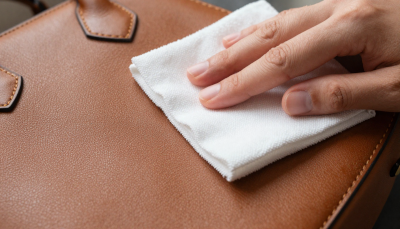
Fresh dye stains are much easier to remove from a leather bag if treated immediately. When dye transfer is still new, the color often sits closer to the surface and hasn’t fully bonded with the leather fibers. Gently blotting the area with a soft cloth and a mild leather-safe cleaner can lift the dye without spreading it further. Avoid rubbing, as this can push the dye deeper into the leather. Acting quickly and using gentle techniques helps remove fresh dye while keeping the leather’s texture and finish intact.
- Act quickly before the dye settles into the leather fibers
- Blot the stain gently instead of rubbing
- Use a mild, leather-safe cleaner or diluted soap
- Work from the outside of the stain toward the center
- Use a soft cloth or cotton pad only
- Let the leather air-dry naturally after cleaning
5. Removing Set-In Dye Stains Without Damage
Set-in dye stains on a leather bag require extra care because the color has already bonded with the leather fibers. Unlike fresh stains, these marks can’t be lifted easily and need slow, controlled cleaning to avoid fading or surface damage. Using gentle, leather-appropriate solutions and working in small sections helps gradually lighten the stain without stripping the leather’s natural oils. Patience is essential, as aggressive methods can cause cracking, dryness, or uneven color. With the right approach, even stubborn dye stains can be reduced while keeping the leather soft and intact.
- Expect gradual improvement rather than instant results
- Use gentle, leather-safe cleaning solutions only
- Work in small sections to control color fading
- Avoid harsh rubbing that can damage the leather surface
- Reapply cleaner lightly instead of over-saturating
- Condition the leather after stain removal to restore softness
6. Dye Removal Methods by Leather Type
Different leather types react differently to dye stains, so using the right removal method is essential to avoid damage. Smooth, finished leathers are more resistant and easier to clean, while porous or textured leathers absorb dye quickly and require extra caution. Using the wrong technique can lead to discoloration, rough patches, or permanent marks. Understanding your leather type helps you choose a safer, more effective dye removal approach and protects the bag’s original look and feel.
- Full-grain leather tolerates gentle cleaners but needs conditioning after
- Top-grain leather responds well to mild soap and leather cleaners
- Genuine leather requires extra care due to weaker surface finishes
- Suede and nubuck should not be cleaned with liquid solutions
- Faux or PU leather allows slightly stronger cleaners but can peel
- Exotic leathers need professional cleaning to avoid damage
7. Restoring Leather Color After Dye Removal
After removing dye from a leather bag, the color may appear uneven or slightly faded. Restoring the leather’s original hue helps maintain its appearance and extends its lifespan. Using leather-specific color restorers, conditioners, or creams can replenish lost pigments and nourish the surface. It’s important to apply these products evenly and in thin layers, allowing the leather to absorb them fully. Proper restoration not only improves the bag’s look but also protects it from future stains and wear.
- Use leather color restorers or creams suitable for your bag’s type
- Apply in thin, even layers to avoid streaks or buildup
- Allow the product to fully absorb between applications
- Condition the leather afterward to maintain softness and flexibility
- Test any color product on a hidden area first
- Repeat the process gradually until the desired color is achieved
8. How to Prevent Dye Transfer on Leather Bags
Preventing dye transfer on leather bags is easier than removing it later. Regular care, protective coatings, and mindful handling can greatly reduce the risk of stains. Using barrier sprays, storing leather away from dark or heavily dyed fabrics, and avoiding prolonged contact with moisture all help protect your bag. By taking simple preventive steps, you can keep your leather looking clean, vibrant, and free from unwanted color stains.
| Prevention Tip | What to Do | Why It Matters |
|---|---|---|
| Protective Spray | Apply a leather-protective or water-repellent spray regularly | Creates a barrier against dye and moisture |
| Avoid Dark Fabrics | Keep leather away from dark or heavily dyed clothing | Reduces risk of color transfer |
| Proper Storage | Store in a cool, dry place, preferably in a dust bag | Prevents contact with materials that can stain |
| Limit Moisture Exposure | Wipe spills immediately and avoid wet conditions | Stops dye from setting and protects leather |
| Mindful Handling | Handle with clean hands and avoid prolonged friction | Reduces accidental dye transfer and wear |
| Regular Inspection | Check leather for early signs of color transfer | Allows prompt treatment before stains set in |
9. FAQs – Removing Dye From Leather Bags
1. Can all dye stains be removed from leather?
Not all dye stains can be completely removed, especially if they have set for a long time or the leather is very porous. Early treatment increases success.
2. What is the safest method to remove fresh dye from leather?
Blot the stain gently with a soft cloth and a mild leather-safe cleaner, working from the outside in without rubbing aggressively.
3. Can I use household cleaners like bleach or vinegar?
Harsh chemicals like bleach can damage leather. Mild solutions like diluted white vinegar or specialized leather cleaners are safer.
4. How do I treat set-in dye stains?
Use gentle, leather-specific cleaning solutions in small sections, applying gradually, and avoid over-saturating the leather.
-
 Cross shoulder leather bag, hand stitched embroidery, bag, handbag, charcoalPKR 3,500.00 FREE SHIPPING IN PAKISTAN
 -
 Handmade Flower Embroidered Crossbody Shoulder BagPKR 6,500.00 FREE SHIPPING IN PAKISTAN
 -
 Handmade Flower Embroidered Small Crossbody Bag – BlackPKR 6,500.00 FREE SHIPPING IN PAKISTAN
 -
 Handmade Flower Embroidery Crossbody Shoulder Bag GrayPKR 6,500.00 FREE SHIPPING IN PAKISTAN
 -
 Trendy Yellow Handmade Flower Crossbody BagPKR 6,500.00 FREE SHIPPING IN PAKISTAN