Full Grain vs. Top Grain vs. Split Grain Leather: What’s the Difference?
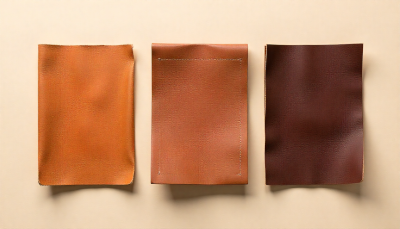
Full Grain vs. Top Grain vs. Split Grain Leather: What’s the Difference?
When shopping for leather products, terms like Full Grain, Top Grain, and Split Grain are often used—but what do they really mean? These labels refer to how the leather is processed and which layer of the hide is used, and they play a major role in determining quality, durability, appearance, and price. Understanding the difference between full grain, top grain, and split grain leather helps you make informed choices, whether you’re investing in a premium bag, wallet, or everyday accessory. In this guide, we break down each type of leather so you can clearly see what sets them apart—and which one is right for you.
1. Introduction: Understanding Leather Grades
Leather grades describe which layer of the animal hide is used and how it is processed, directly affecting a product’s quality, durability, texture, and lifespan. Among the most common terms you’ll encounter are Full Grain, Top Grain, and Split Grain leather. While they may sound similar, each grade differs significantly in strength, appearance, and performance. Understanding these leather grades helps you recognize true craftsmanship, avoid misleading labels, and choose leather products that match your style expectations, usage needs, and budget.
- Leather grades indicate which layer of the hide is used and how it is treated.
- Full Grain leather is the highest quality, made from the top layer of the hide with natural texture intact.
- Top Grain leather is slightly refined for a smoother look while maintaining durability.
- Split Grain leather comes from the lower layers of the hide and is less durable.
- Each grade differs in strength, appearance, aging, and price.
- Understanding these differences helps you choose leather that suits your style, usage, and budget.
Tip
When evaluating leather quality, don’t rely on labels alone. Pay attention to the leather’s texture, thickness, and natural markings—higher-quality leathers like full grain develop a rich patina over time, while lower-grade leathers tend to wear out faster. Understanding leather grades helps you invest in pieces that not only look good but also age beautifully with use.
2. What Is Full Grain Leather?
Full grain leather is the highest quality leather available, made from the top layer of the hide with its natural grain left intact. Unlike other leather types, it is not sanded or buffed to remove imperfections, allowing the hide’s natural texture, strength, and character to remain visible. This makes full grain leather exceptionally durable, breathable, and resistant to wear. Over time, it develops a rich patina that enhances its appearance, making it a preferred choice for premium bags, wallets, and long-lasting leather goods.
- Made from the top layer of the hide with the natural grain intact.
- Known for its exceptional durability and strength.
- Develops a rich natural patina over time.
- Allows better breathability compared to processed leathers.
- Retains natural marks that add character and authenticity.
- Commonly used in premium leather bags, wallets, and accessories.
3. What Is Top Grain Leather?
Top grain leather is the second-highest quality leather, created by sanding and refinishing the top layer of the hide to remove imperfections. This process gives it a smooth, uniform appearance while retaining good strength and durability. Top grain leather is slightly more flexible than full grain, making it popular for stylish bags, wallets, and accessories that require a polished, consistent look without compromising on quality.
- Top Grain Leather is made from the top layer of the hide, with imperfections sanded or buffed away.
- It has a smoother and more uniform appearance compared to full grain leather.
- Durable and strong, though slightly less than full grain.
- More flexible and easier to work with for bags, wallets, and accessories.
- Develops a subtle patina over time, but less pronounced than full grain leather.
4. What Is Split Grain Leather?
Split grain leather is made from the lower layers of the animal hide, separated from the top grain during processing. It is generally less durable and has a more uniform but less natural appearance compared to full grain or top grain leather. To improve its look and texture, split leather is often coated or embossed with a faux grain pattern. While more affordable, it does not develop the rich patina of higher-quality leathers, making it a practical choice for budget-friendly leather goods.
- Split Grain Leather comes from the lower layers of the hide, separated from the top grain.
- It is generally less durable and has a more uniform appearance than full grain or top grain leather.
- Often coated or embossed with a faux grain pattern to improve texture and look.
- More affordable than higher-quality leathers.
- Does not develop the rich patina over time like full grain leather.
5.Full Grain vs. Top Grain vs. Split Grain: Key Differences
Understanding the differences between full grain, top grain, and split grain leather is essential for choosing the right leather product. While all three come from the same animal hide, they vary significantly in quality, durability, appearance, and aging properties. Full grain leather is the strongest and most natural-looking, top grain offers a polished finish with good durability, and split grain is more affordable but less durable. Knowing these distinctions helps you make informed decisions and select leather goods that meet your style, usage, and longevity needs.
| Feature | Full Grain Leather | Top Grain Leather | Split Grain Leather |
|---|---|---|---|
| Source Layer | Top layer of the hide, natural grain intact | Top layer, sanded/buffed to remove imperfections | Lower layers of the hide, separated from top grain |
| Durability | Highest; very strong and long-lasting | High, slightly less than full grain | Lower; prone to wear over time |
| Appearance | Natural texture, develops rich patina | Smoother, uniform, polished look | Coated or embossed; less natural |
| Flexibility | Stiff initially, softens with use | More flexible than full grain | Flexible but less premium feel |
| Cost | Highest | Moderate | Most affordable |
| Best For | Luxury bags, wallets, long-lasting goods | Stylish bags, wallets, accessories | Budget-friendly items, coated leather goods |
6. Which Type of Leather Is Best for You?
Choosing the right type of leather depends on your priorities, lifestyle, and budget. If you value maximum durability, natural texture, and a luxurious patina over time, full grain leather is the ideal choice, perfect for high-end bags, wallets, and long-lasting accessories. Top grain leather, with its smooth and polished finish, offers a balance between durability and style, making it suitable for everyday use while maintaining a refined look. Split grain leather, while more affordable, is less durable and often treated to mimic higher-grade leathers, making it a practical option for fashion pieces or short-term use. Understanding the characteristics of each leather type ensures that you invest in products that meet your expectations for quality, longevity, and appearance.
7. Conclusion
In conclusion, understanding the differences between full grain, top grain, and split grain leather is key to making informed choices when investing in leather goods. Full grain leather stands out for its unmatched durability, natural beauty, and ability to develop a rich patina over time. Top grain leather offers a polished and refined look while maintaining good strength, making it ideal for everyday accessories. Split grain leather provides an affordable alternative, though it lacks the longevity and character of higher-grade leathers. By recognizing these distinctions, you can select leather products that best match your style preferences, usage needs, and long-term value, ensuring every piece you own is both functional and timeles
8. FAQs
FAQs: Full Grain vs. Top Grain vs. Split Grain Leather
1. What is full grain leather?
Full grain leather is the highest-quality leather, made from the top layer of the hide with its natural grain intact. It is durable, develops a rich patina over time, and retains the hide’s natural texture.
2. What is top grain leather?
Top grain leather is the second-highest quality leather. Its surface is sanded and polished to remove imperfections, giving it a smooth and uniform appearance while maintaining good strength and durability.
3. What is split grain leather?
Split grain leather comes from the lower layers of the hide. It is less durable, often coated or embossed to mimic higher-grade leather, and generally more affordable.
4. How does full grain leather age?
Full grain leather develops a natural patina over time, enhancing its beauty and character. It becomes softer and richer in appearance without losing durability.
5. Is top grain leather durable?
Yes, top grain leather is durable and resistant to wear, though slightly less so than full grain leather. Its smooth finish makes it ideal for stylish everyday accessories.
6. Can split grain leather last long?
Split grain leather is less durable than full or top grain leather. While it can last for a few years with proper care, it is prone to wear and does not develop the same patina.
7. Which leather is best for luxury bags?
Full grain leather is the best choice for luxury bags due to its strength, natural texture, and ability to age beautifully over time.
8. Is top grain leather easier to maintain?
Yes, top grain leather is easier to clean and maintain than full grain because its smooth, sanded surface resists stains and scratches better.
9. Why is split grain leather cheaper?
Split grain leather is sourced from the lower layers of the hide, which are less durable and lack the natural grain of higher-quality leather. Its processing and finishing make it more affordable.
10. How do I choose the right leather for me?
Choose based on your priorities: full grain for durability and luxury, top grain for a balance of style and strength, and split grain for budget-friendly or short-term use.
-
 Handmade Flower Embroidered Dark Gray Small Crossbody BagPKR 7,000.00 FREE SHIPPING IN PAKISTAN
 -
 Handmade Flower Embroidered Dark Skin Small Crossbody BagPKR 7,000.00 FREE SHIPPING IN PAKISTAN
 -
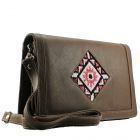 Handmade Flower Embroidered Crossbody Bag – BrownPKR 7,000.00 FREE SHIPPING IN PAKISTAN
 -
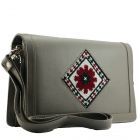 Handmade Flower Embroidered Crossbody Bag – GrayPKR 7,000.00 FREE SHIPPING IN PAKISTAN
 -
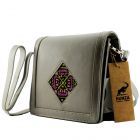 Handmade Flower Embroidered Crossbody Bag – Bright GrayPKR 6,500.00 FREE SHIPPING IN PAKISTAN