Sacred Rock of Hunza (Haldeikish)
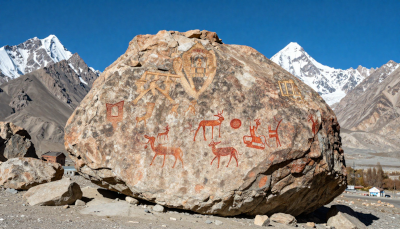
Sacred Rock of Hunza (Haldeikish)
The Sacred Rock of Hunza, locally known as Haldeikish, is one of the most significant historical landmarks in Hunza Valley. Located along the ancient Silk Route near Karimabad, this massive rock is covered with ancient carvings, inscriptions, and Buddhist symbols dating back thousands of years. It stands as powerful evidence of Hunza’s role in trade, religion, and cultural exchange during early civilizations.
Table Of Content
- 1. Historical Background of Haldeikish
- 2. Location & Silk Route Connection
- 3. Ancient Petroglyphs & Carvings
- 4. Buddhist Influence in Hunza
- 5. Brahmi & Kharosthi Inscriptions
- 6. Cultural & Archaeological Importance
- 7. Tourism & Visitor Experience
- 8. Preservation & Heritage Value
- 9. Best Time to Visit
- 10. Why Visit Sacred Rock of Hunza
- FAQS
1. Historical Background of Haldeikish
- Ancient Landmark: The Sacred Rock dates back to the 1st millennium CE and reflects early human settlement and artistic expression in the Hunza region.
- Early Civilizations: The carvings show that Hunza was inhabited and culturally active long before modern development.
- Historical Documentation: Inscriptions on the rock serve as historical records left by travelers and monks.
2. Location & Silk Route Connection
- Strategic Position: Located near Karimabad along the ancient Silk Route.
- Trade Route Significance: Merchants and travelers passing through Hunza carved symbols and messages on the rock.
- Cultural Exchange Hub: The site represents interaction between Central Asia, South Asia, and China.
3. Ancient Petroglyphs & Carvings
- Rock Art: The surface contains carvings of animals, stupas, human figures, and symbolic art.
- Spiritual Symbols: Many carvings reflect religious beliefs and spiritual traditions.
- Artistic Expression: These petroglyphs demonstrate early artistic skills and storytelling methods.
4. Buddhist Influence in Hunza
- Buddhist Stupas: Several carvings depict stupas, showing the presence of Buddhism in ancient Hunza.
- Religious Spread: The Silk Route helped spread Buddhist teachings across the region.
- Spiritual Heritage: The Sacred Rock reflects the valley’s pre-Islamic religious history.
5. Brahmi & Kharosthi Inscriptions
- Ancient Scripts: Inscriptions in Brahmi and Kharosthi scripts are visible on the rock.
- Historical Messages: These scripts provide insight into languages used by ancient traders and monks.
- Archaeological Evidence: The inscriptions confirm Hunza’s link to broader South Asian civilizations.
6. Cultural & Archaeological Importance
- National Heritage: The Sacred Rock is considered an important archaeological treasure.
- Educational Value: Historians and researchers study the site to understand regional history.
- Cultural Identity: It symbolizes Hunza’s rich historical legacy.
7. Tourism & Visitor Experience
- Accessible Location: Easily reachable for tourists visiting Hunza Valley.
- Photography Spot: Offers a unique combination of history and mountain scenery.
- Learning Experience: Visitors gain insight into ancient Silk Route history.
8. Preservation & Heritage Value
- Protected Site: Efforts are made to preserve the carvings from environmental damage.
- Historical Conservation: Authorities recognize its importance as a cultural monument.
- Future Responsibility: Awareness is needed to protect this ancient treasure.
9. Best Time to Visit
- Spring and summer provide clear weather and comfortable conditions.
- Daytime visits allow better visibility of carvings and inscriptions.
- Combine with a visit to nearby Karimabad and Baltit Fort.
10. Why Visit Sacred Rock of Hunza
- Explore one of Hunza’s oldest historical landmarks.
- Witness authentic Silk Route carvings and inscriptions.
- Experience the deep cultural heritage of Hunza Valley.
FAQs
1. What is the Sacred Rock of Hunza?
It is an ancient rock site in Hunza Valley covered with historical carvings and inscriptions from the Silk Route era.
2. Where is Haldeikish located?
It is located near Karimabad in Hunza Valley along the ancient Silk Route.
3. What type of carvings are found there?
The rock features Buddhist stupas, animals, symbols, and inscriptions in ancient scripts.
4. Why is it historically important?
It provides archaeological evidence of early trade, religion, and cultural exchange in Hunza.
5. When is the best time to visit?
Spring and summer are the best seasons for visiting due to clear weather and easy access.